
Context & Motivation
Misinformation ranks second among 33 risks over the next two years, according to global experts (Ref A), and the problem is likely to get worse. One large study found that false news reached 1,500 people about six times faster than true news (Ref B). Humans simply cannot keep up with checking everything machines can produce.
Target Audience
People who want to look beyond viral headlines, review the entire chain of sub-facts and evidence, and contribute towards reducing ambiguity. Everyday readers who want to know which parts of a story are verified, what remains uncertain, and what they need to decide for themselves.
Customer Problems
Humans dislike ambiguity and want a clean-cut answer, a readily available perfectly reliable truth. But it is becoming harder to cleanly separate truth from falsehood, and our understanding of reality should reflect that.
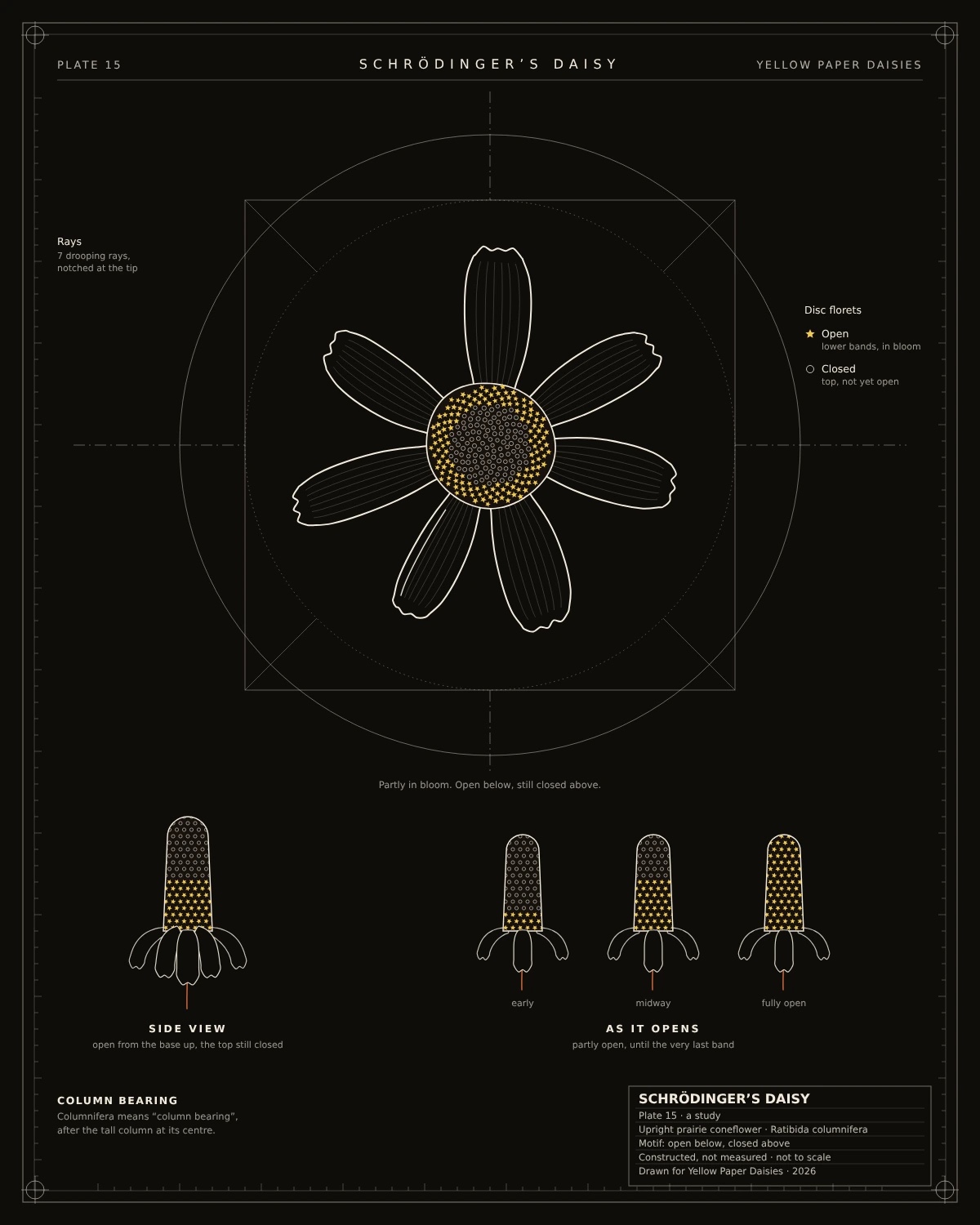
We’re entering the era of Schrödinger’s Truth. A claim may not be 100% verifiable, but do we know where its evidence came from? How was that evidence collected? What remains unverified, and how likely is each step in the process to be correct?
Consider a video of a hospital fire going viral during a conflict, followed by thousands of AI-generated versions. One clip is exposed as fake, and people begin questioning whether the entire incident happened. The chain of events that needs to be investigated gets lost because one piece of evidence doesn’t add up.
Hypotheses
- Black-and-white answers: Everyone wants a black-and-white answer, but deepfakes make it difficult to cleanly separate truth from falsehood.
- The verdict, not the process: People are shown the verdict, but not the process behind it.
- Machine scale: There aren’t enough humans in the world to verify all machine-made misinformation.
- One piece doesn’t add up: People start questioning an entire incident because one piece doesn’t add up.
- Gaming the system: A large population of people can game a vote by upvoting a falsehood.
Solutions
Investigative design offers a way forward. The Museum of Modern Art’s exhibition Full Disclosure: The Edge of Information Design explores how information design can help people understand complex information. Its investigative design materials describe an approach that lets people “assess the trustworthiness of the process itself” (Ref C).
Unlike community notes and online encyclopedias, which aim to establish a conclusion, this approach reviews the process behind a claim rather than demanding a single verdict. The focus is on the integrity of the process and the balance of probabilities, not the absolute certainty of a final verdict.
We don’t always need to be 100% certain. Sometimes 80% certainty is enough, provided we understand what is known, what isn’t, and why. That allows each person to make their own judgement.
- Show the process, not the verdict: AI fact-checks claims and publishes a log of the sources used, tracing each source back to its origin and making missing evidence visible.
- Vote on the process, not the outcome: Humans review each source link and vote on how much they trust it using an up or down click or a trust score from 0 to 100 percent. Users can review the entire chain of sub-facts and evidence to score each part. They evaluate how well the evidence supports each step rather than voting on whether the overall story is true or false.
- Make missing steps visible: People can call out missing process steps. AI provides its reasoning for why a step should or shouldn’t be included, and people can vote to remove a step if it doesn’t seem logically required.
- Schrödinger’s Truth: Each link has a probability, contributing to an overall probability for the claim. Nothing is declared 100% true or 100% false. Whatever remains unconfirmed is labelled as such, and if no evidence exists, the shared ledger says so.
- Credibility must be earned: Once later evidence verifies a claim above a set confidence level, those who voted incorrectly receive a negative score. Over time, this builds a person's credibility. High credibility carries more weight in the overall probability score, with a minimum number of votes required. Past credibility is the only scoring factor.
- Money alone can’t game it: Someone with unlimited money should not be able to manipulate the system through money alone. They would need to compromise a majority of high-credibility users.
- 100% transparency: Everyone can see who voted for what. Votes are recorded on a cryptographic ledger that allows independent verification, including anonymous verification where appropriate. Anyone can inspect the record and spot red flags, such as someone with high credibility voting along certain patterns/ ideologies, even when that means supporting falsehoods.
- Paid credibility: People with high credibility earn a share of the website’s subscription revenue over time, creating a financial incentive for careful, evidence-based judgement.
- AI handles the volume, not the verdicts: AI groups near-identical content (which humans can override), helping reviewers focus their attention. People remain responsible for judging the evidence.
Not Yet Solved
- Buying the voter base: A resourceful malicious actor could buy 50% of the voter base, even if minimum required voter base is extremely large.
- Patient capture: A group of voters could earn credibility for years, then spend it on one lie.
Outcome
- Make the process visible: The parts of a story that are verified, unverified or strongly supported become known to all, and everyone can make their own conclusions.
- Reflect reality as it is: Truth is no longer forced into black-and-white answers when the evidence supports degrees of confidence instead.
- Reward careful judgement: Credibility becomes something people earn by being right and get paid for over time.
Appendix
- World Economic Forum, The Global Risks Report 2026. Read the report
- Vosoughi, Roy and Aral, “The spread of true and false news online,” Science, 2018. Read the paper
- The Museum of Modern Art, Full Disclosure: The Edge of Information Design, September 27, 2026 – June 13, 2027. Read about the exhibition