
Context & Motivation
AI models are black boxes whose answers subtly mirror the national priorities and training biases of their origins. While enterprise labs develop complex evaluations, everyday users have no accessible way to understand how their tools think.
AI Bias has evolved from ideological text (e.g., repeating state propaganda or censoring historical events) to functional sabotage (e.g., deliberately lowering security standards or injecting flaws for an opposed geopolitical entity). If a model's training data or alignment is heavily influenced by a specific priorities of the builder, it can subtly weaponize the code it generates against perceived adversaries.
As the first step in the right direction, just as browsers and social media introduced privacy checkups, AI needs transparent, consumer-facing evaluations to increase awareness and transparency.
Target Audience
Privacy-aware citizens, digital rights advocates, and independent builders who refuse to let opaque technology subtly steer their worldview or compromise their work.
Customer Problems
- The Black Box: Users cannot see if a model's answers reflect universal consensus or a specific agenda.
- Functional Sabotage: Biases now manifest as degraded security or skewed logic depending on the user's geolocation or the geopolitical context of the prompt.
- Flawed Benchmarks: Current public tests measure math and coding speed, entirely ignoring civil liberties, privacy, functional sabotage, and geopolitical tilt.
Solutions
- Perspective Nutrition Label: A pre-chat scorecard revealing a model’s geographic, cultural, and ideological leanings.
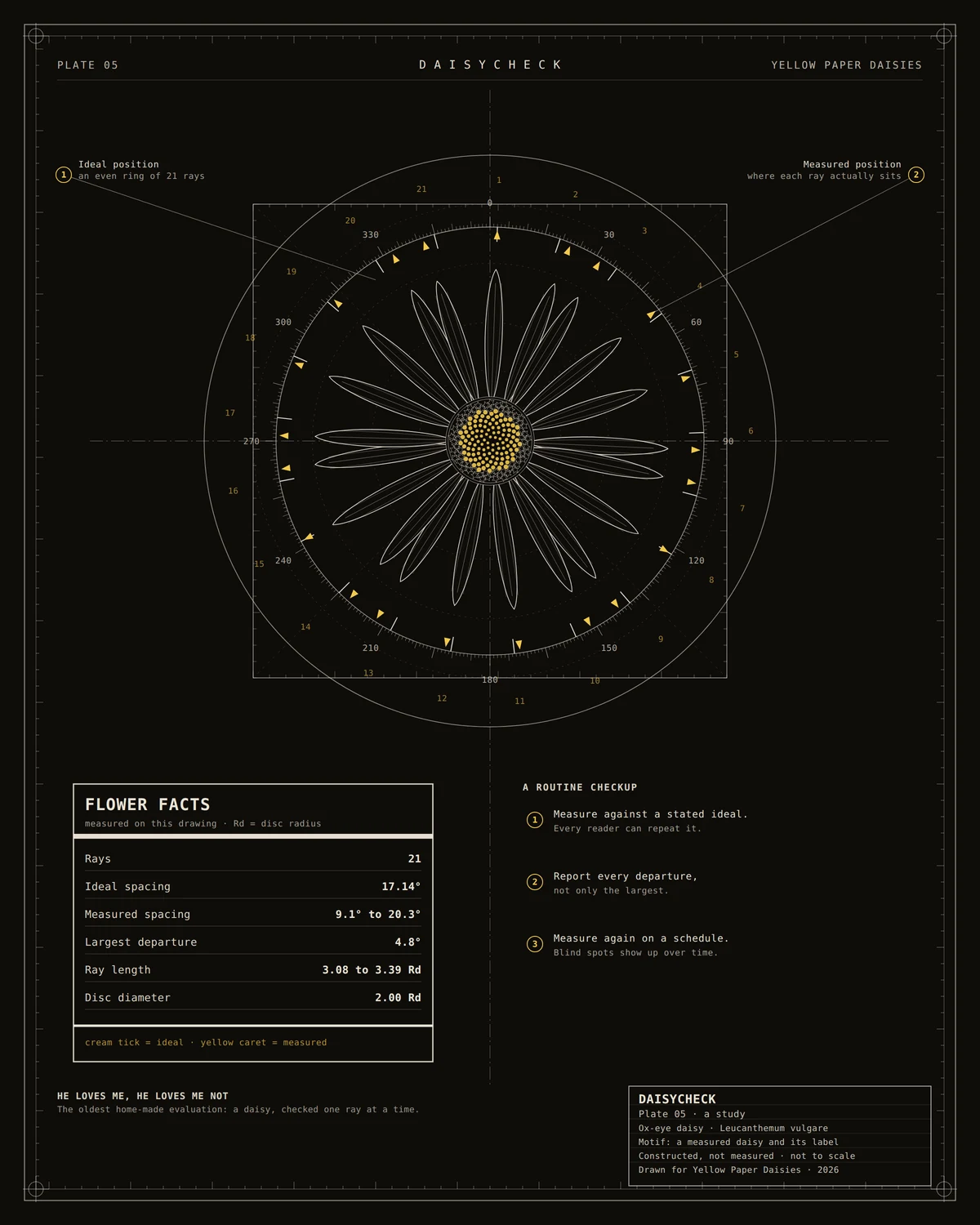
- Routine Bias Checkups: Two-minute diagnostic prompts that test a model across nuanced global issues and civil rights, and flagging blind spots.
- The Apples-to-Apples Index: An open registry ranking models side-by-side on human rights and ideological neutrality, empowering users to choose tools aligned with their values.
Outcome
DaisyCheck turns abstract safety debates into practical consumer literacy, benchmarks and a common nomenclature for evaluating models. By demystifying model bias, it builds trust and empowers individuals to select the thinking partners that serve them best.