Ideas / September 2026
Idea 4 · Monday, September 28, 2026 · 2 min read

EverlastingDaisy

Everlasting is an illustrative concept for a community-owned AI Governance product that lets communities govern their generational knowledge and, if they choose, sustain it through a circular economy.

Posted September 28, 2026 · Edited Sep 30, 2026, 10:52 PM PDT

Illustrative concept
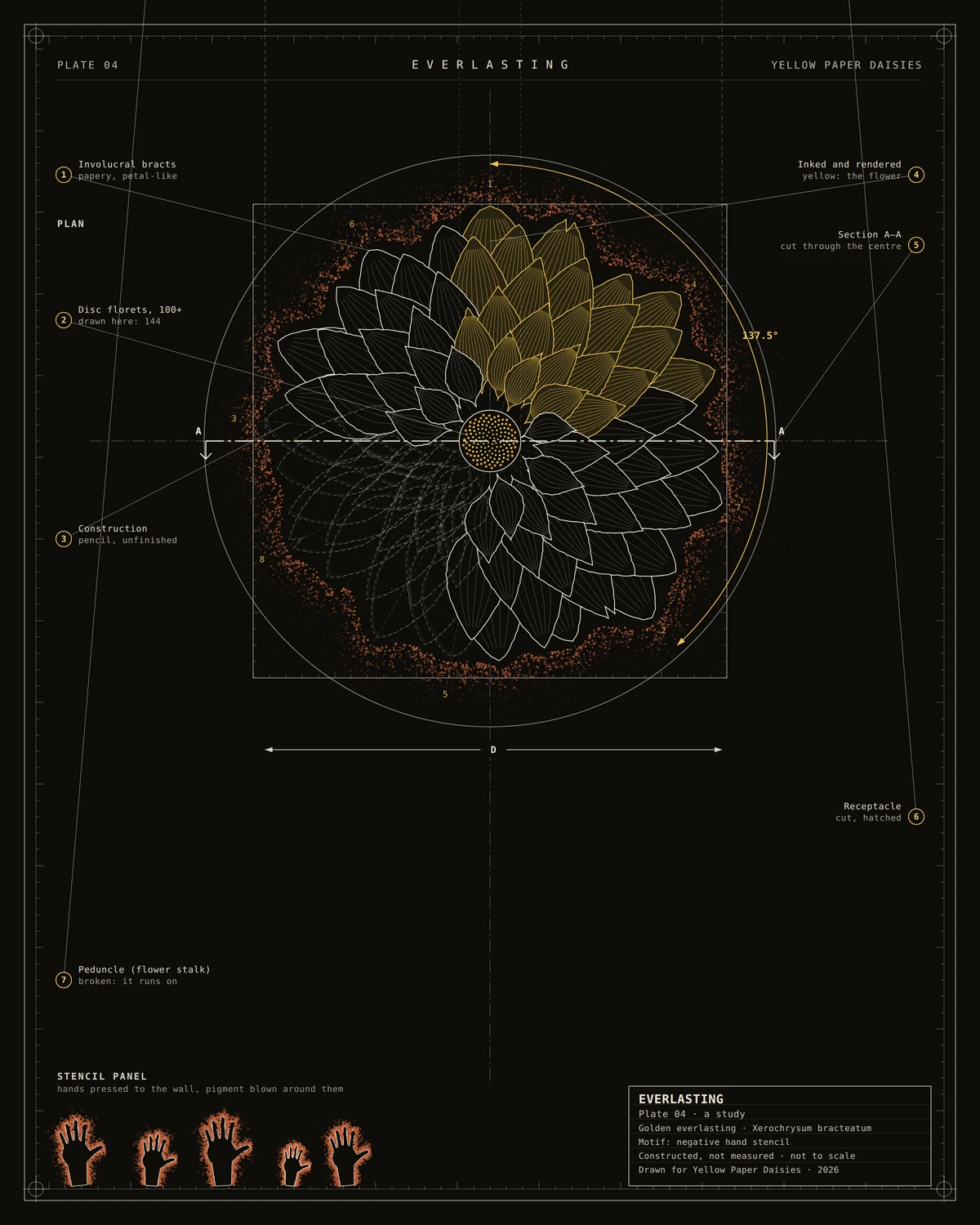
The engineering drawing made for this idea
The drawing · open full size
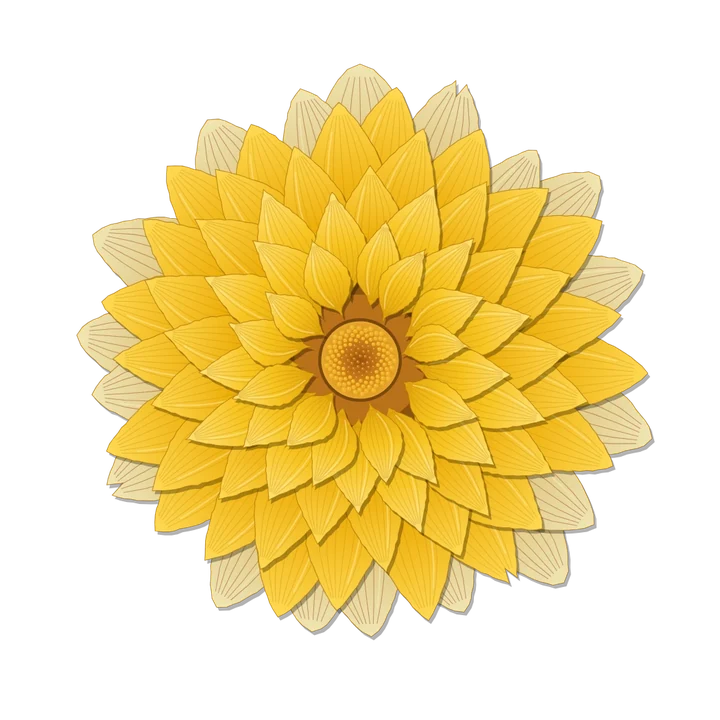
Golden everlastingGolden everlastingXerochrysum bracteatum
The flower

Context & Motivation

Communities have long passed knowledge down through teachings, prayers, stories and art, yet many children now grow up in technology carrying little of their heritage. As elders pass on, that knowledge can fade within a generation. Local AI now lets communities govern their own knowledge, alongside traditional ways, without outside servers.

Target Audience

Communities with deep generational knowledge, such as Indigenous nations, diaspora, faith and rural communities, starting with those ready to lead. Elders hold the knowledge, young people carry it forward, and supporters are partners.

Customer Problems

A community council knows its elders hold knowledge no book has captured. Young people are moving away or absorbed in screens. Someone in the wider community has money and goodwill but doesn't know what to fund, whom to trust or what a first step looks like. The council doesn't have technical staff and is wary of anything that puts its knowledge in someone else's hands. An elder would gladly share with a grandchild but not with a stranger's server. The problem then is governing how to carry knowledge forward, control what stays sacred, help youth see themselves in technology, while keeping the benefits of it locally.

Hypothesis

  1. Time: elders and youth rarely share protected time.
  2. Control: no safe way to record knowledge without losing control of it and how it is used.
  3. Fidelity: AI always answers, even when wrong or never meant to be shared.
  4. Capacity: few communities have technical staff; supporters lack a trusted way to help.
  5. Benefit: the value knowledge creates often flows away.

Solutions

  1. Governance first: the community decides who may access each item; sacred knowledge stays private. The archive is community-owned and revocable.
  2. Ask, don't guess: the assistant answers only from approved sources and holds questions it is unsure about.
  3. Keeper Circle: community-chosen reviewers, like security teams, examine held questions. Elders answer them, and decide sacred matters alone.
  4. Trust and funding: a local steward guides the work, independent checks confirm the process, and supporters fund without claiming ownership.
  5. Circular economy: by collective choice, communities can turn knowledge into art and learning tools. Income stays local, paying elders, keepers and youth, funding more preservation in a self-sustaining cycle.

Outcome

  1. Preserving generational knowledge while its holders can share it.
  2. Knowledge, and decisions about it, remain with those who carry it.
  3. Expanding the diversity of technology and technology-enabled people, so AI reflects many ways of knowing.
  4. A circular economy where AI-enabled knowledge management as a service returns value to communities.
  5. Generational knowledge preservation mechanisms created across communities can also inform AI governance frameworks that are useful beyond them.

About this drawing

Why an everlasting daisy, and why a hand

The art form: hand stencils

A hand stencil is made by pressing a hand to rock and blowing pigment around it through a hollow bone, so the hand stays bare and the colour surrounds it. The best-known gallery is Cueva de las Manos, the Cave of the Hands, in Santa Cruz Province, Argentina, listed by UNESCO in 1999. UNESCO dates its cave art to between 13,000 and 9,500 years ago and says the makers may have been ancestors of the hunter-gatherer communities of Patagonia. Most of the hands are left hands. The technique is far older and wider than one cave: the oldest dated example, from Liang Metanduno on Muna Island in Indonesia, is at least 67,800 years old.

The flower: golden everlasting

Xerochrysum bracteatum is a daisy-family plant native to Australia. What look like petals are papery bracts made of dead cells; the flower has no ray florets. Inside them sit a hundred or more tiny florets. Before the flower opens, the bracts curl over and shield them.

The metaphor

You can see this art form on this website only because it has been digitized: photographed, traced and shared. Even the oldest known stencil, on Muna Island, is mostly worn away, and researchers used digital tracing to see it. Everlasting does the same for living traditions. It lets communities record their art forms and practices on their own terms, so that they keep flowing between generations and keep finding new expression. The community decides if and when any of it is shared or monetized, and what stays sacred, just as the hand in a stencil stays bare while the colour goes around it. In this way AI becomes an enabler of traditional art forms, and a promoter of their diversity.

How to read the plate

  • Plan. The flower seen from above. 89 bracts, each placed 137.5° after the last, the golden angle that daisy-family heads follow when they pack their parts.
  • Elevation and Section A–A. The same flower from the side: the left half is the outside, the right half is cut through the centre. Both come from one model, so their points line up.
  • The disc. The species has 100 or more florets in the centre. 144 are drawn.
  • The pencil quarter. Left unfinished on purpose. The idea is still taking shape.
  • The halo and the hands. Pigment blown around the flower, the way a stencil is made, and a panel of hand stencils. It interprets the technique; it does not copy any wall.

The making

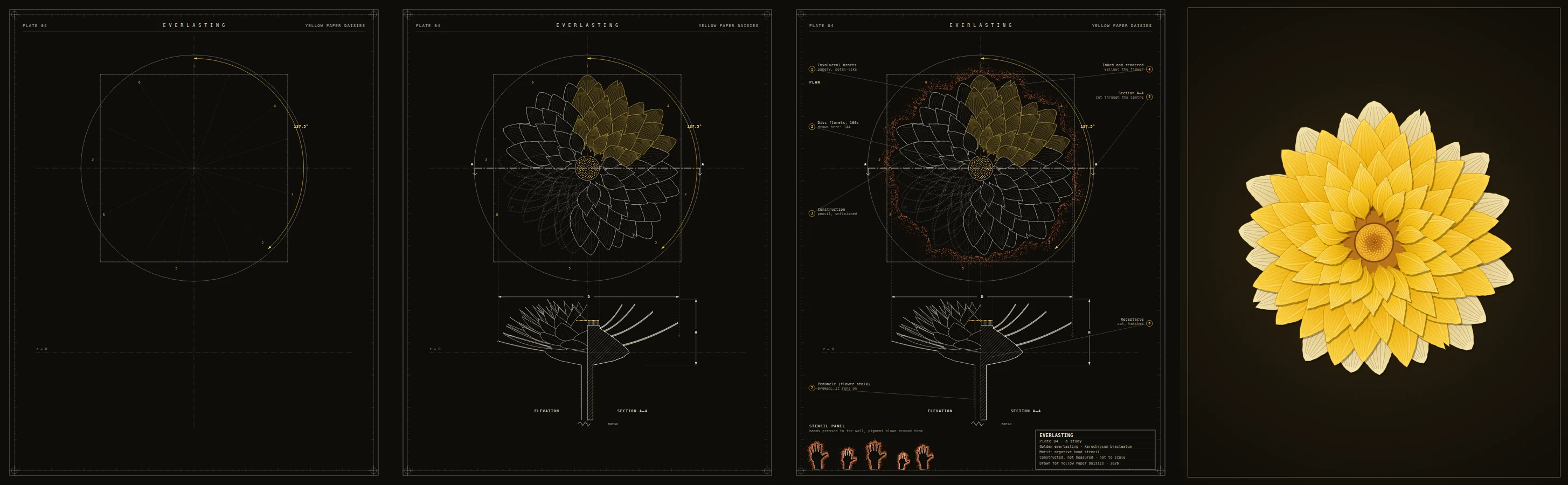
The drawing in stages, ending with the finished flower
Pranav Bhedi

About the author

Pranav Bhedi

Technology leader with 10+ years scaling cybersecurity, privacy and AI-enabled products, based in Vancouver. I write one idea a day about how AI can do some good.